

SEO is a primary acquisition channel for enterprises operating at scale. It drives sustained organic visibility, protects brand search presence, and captures high-intent demand across thousands of product and service pages. Enterprise SEO transforms search into a predictable, revenue-generating growth engine.
What is Enterprise SEO?
Enterprise SEO is the strategic optimization of large, complex websites with 1,000+ indexed pages using scalable technical systems, automation, and cross-functional governance to increase organic visibility and revenue performance.
It can include both small and large organizations.
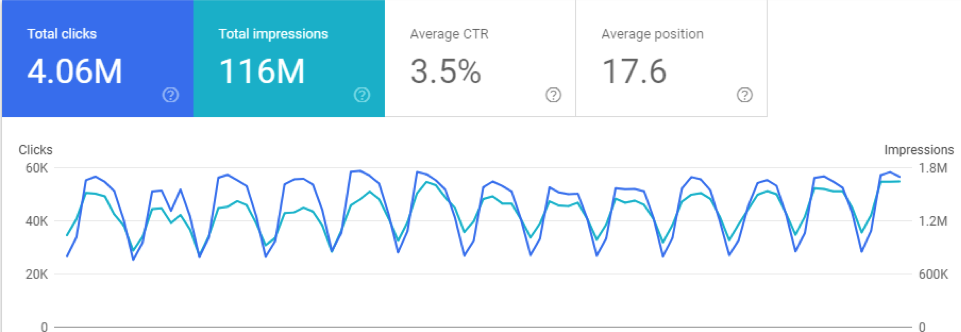
Unlike traditional SEO, enterprise SEO operates across multiple teams, departments, and digital properties. It integrates automation, governance frameworks, and performance measurement to ensure that organic search consistently contributes to traffic growth, brand visibility, and revenue generation
What is an Enterprise Site?
An enterprise website is a high-volume digital property that requires scalable infrastructure and organizational coordination.
Enterprise websites cater to organizations, groups, and ventures. It creates a large room for quality services that generate good R.O.I. figures for your business.
The primary difference between enterprise sites and regular websites is their content management systems. Enterprise sites require various tools and a continuous plan of action to deliver a little more than traditional websites.
These organizations often include firms, businesses, charities, schools, government entities, and more. The best part is that you get a website that is both business-oriented and customer-centric.
What Are the Core Requirements of an Enterprise Website?
We got some ideas about enterprise sites. It’s good to understand what successful enterprise websites must have.
- A platform that could satisfy customers’ queries/doubts.
- A place that clearly defines your business’s unique propositions and its proficiency.—New, fresh, and timely-updated content for end-users.
- Sections elevating interests and quality leads.
- Visible placed call-to-actions (C.T.A.s) to help users understand what to do next.
- keeping an eye on and integrating tracking and analysis tools.
Attributes of Enterprise Websites
| Attribute | Description |
|---|---|
| URL Volume | 1,000–1,000,000+ pages |
| Architecture | Multi-layer taxonomy |
| CMS | Enterprise Content Management System |
| Teams | SEO + Engineering + Product + Legal |
| Data Volume | High |
| Internationalization | Multi-region / Multi-language |
How Does Enterprise SEO Differ From Traditional SEO?
Enterprise SEO differs from traditional SEO in scale, governance, technical complexity, and operational structure.
Enterprise SEO VS. Traditional SEO
| Attribute | Traditional SEO | Enterprise SEO |
|---|---|---|
| Page Volume | Low–Medium | 1,000+ URLs |
| Execution | Manual | Automated + Systematic |
| Teams | Small | Cross-functional |
| Focus | Rankings | Revenue + Infrastructure |
| Complexity | Moderate | High |
Enterprise SEO transforms search optimization from a tactical marketing activity into a scalable, governance-driven growth system.
Why Is Enterprise SEO Important?
Enterprise SEO is critical because it turns large, complex websites into structured, revenue-generating organic ecosystems.
Major reasons:
- Scalable Revenue Growth – Expands non-branded and transactional visibility across thousands of high-intent queries.
- Brand Protection – Controls branded SERP results and safeguards search reputation.
- Crawl & Index Efficiency – Optimizes crawl budget and prevents index bloat across large URL inventories.
- Lower Acquisition Costs – Reduces reliance on paid channels through compounding organic visibility.
- Operational Governance – Aligns SEO with engineering, product, and analytics teams.
- International Scalability – Manages multi-language and multi-region search environments.
- Sustainable Competitive Advantage – Builds long-term topical authority and search equity.
Enterprises do not compete with small websites. They compete with high-authority domains such as Amazon, Walmart, Hostinger, Mailchimp, and Kinsta.
Large websites maintain extensive keyword portfolios and backlink ecosystems. For example, websites like Mailchimp operate with hundreds of thousands of indexed URLs and millions of backlinks. Brand recognition alone is not enough for rankings. Structured SEO processes remain essential.
What Makes Enterprise SEO Different?
Enterprise SEO differs from traditional SEO in scale, governance, and revenue impact. It optimizes entire systems, templates, internal link structures, and technical frameworks, rather than individual pages.
Brands such as Amazon and Adobe operate across thousands of URLs, requiring automation, cross-functional coordination, and infrastructure-level control.
It also protects brand equity. In one documented case, a company recovered $32 million in monthly revenue after restructuring its branded search results. By reclaiming control over brand-name SERPs and restoring high-converting pages to top positions, revenue performance rebounded significantly.
Enterprise SEO transforms search optimization from tactical execution into a long-term enterprise growth architecture.
Pillars of Enterprise SEO
Speed is the currency of good organic marketing. It’s no surprise that over 73% of brands have an in-house team for all their processes and work.
An established organization can achieve maximum results while working in harmony. They can apply strategies quickly, create content fast, and run campaigns with a systematic team in place.
In simple words, organizations thrive on enterprise SEO, and we must not forget its five strong pillars.
Thoughtful keywords
Keywords were the prime concern of any campaign strategy in the past. This was true long before enterprise SEO came onto the SEO scene.
We cannot deny that search engines, humans, and bots have evolved in recent years.
It’s time to look at the bigger picture and welcome enterprise SEO with open arms. It’s high time to focus on users’ search intent.
It’s even better to understand the complementary relationship between key phrases and words. Your focus should be more on customers’ intent and keywords related to the same intent.
Many companies either take a microscopic approach to using keywords or a holistic approach. These approaches are great but are unable to move the needle in the long run.
The keywords that consumers use to search for your website are essential. Here is a list of keyword types that you should know while implementing enterprise SEO:
Transactional keywords
These keywords are profitable. People are in a hurry and want to save their time surfing the web. They turn to Google and enter what they want. Then they click on the first keyword they see and take their wallets out. That’s the reason these keywords are coined transactional keywords.
So, don’t wait for that perfect moment to include these. Instead, always use these keywords mindfully in your enterprise SEO strategy.
If you are an e-commerce enterprise and include long-tail keywords like “New Mac lip shades” in your website, your chances of making a sale for this lip shade are high.
Non-branded keywords
With the help of these keywords, you can enjoy tons of organic traffic. These terms have a high volume. They do relate to your products and services but don’t include your company’s name.
For example: “Online marketing agency” and “SEO services” are relevant and non-branded keywords.
You will have various options for non-branded keywords. This is because the keywords your audience uses to search for your brand are almost endless.
Branded keywords
Yes, you guessed it right!
It’s the opposite of non-branded keywords. The people who enter these keywords know about your business. They can be your loyal fans and want to know more about your brand.
These keywords often convey a positive image of your brand on Google’s front page. Example: “Apple,” “Apple reviews,” or “iPhone pricing.”
This means the person is already a fan of Apple and now wants to purchase an iPhone after looking at its product reviews.
Generic keywords
In this case, people are in a dilemma where they are unsure about what they want. So, often they enter some random keywords.
The best part, these generic keywords have a wider reach. Think about it in this way, and these are non-branded queries; it doesn’t cater to any single brand.
And if you rank for these keywords, you will be the first one to gain maximum visibility. For example: if you’re trying to rank for an e-commerce brand, focus on keywords like “shoes,” “shirts,” or “jean.”
This will help you to show up at the first stage of any buyer’s purchasing journey.
Cross-Functional Team Support
Enterprise SEO is not a one-person show. A team of skilled players and creative minds is required to expand your brand’s name. Moreover, your chosen SEO platform must deliver helpful information to help a beginner and an expert.
You bring all your team members on the same page by empowering them. Your team has real-time access to all the information. This way, they can create any strategy and share the process with anyone in less time.
This saves time and also supports efficiency in the entire SEO process.
Fall in Love With Automation
Automation is the true companion of enterprise SEO. It acts as a savior for your team members because creating content for 15,000 products isn’t easy (it’s tough).
As per stats, companies using automation enjoy a 12.2 % reduction in marketing loads. Companies can automate their tasks like position tracking, log file analysis, checking brand mentions, and more.
Ultimately, they can focus on things that matter. For example: finding loopholes in campaigns, keyword research, and improving the quality of backlinks.
Quality Content Creation
Every organization should mark these words as a reminder. Everything falls apart if your content is not on point. So, do the groundwork first.
Get on board with a good writer for your blog posts and a copywriter for your product descriptions. Invest in great quality content creation and then optimize the same for rankings.
It includes different types of content, from visual to written. The new content group also includes voice search (it’s becoming big).
Experiment with different content types and find what works the best for your business in the current landscape.
SEO Analysis and Auditing
It’s easy to strategize, plan and aim for high numbers. But what we often miss is the analysis part. For better results, it’s essential to initiate an audit for enterprise SEO campaigns.
It’s good to know where your site stands in the optimization and ranking field. In the case of an enterprise SEO audit, it takes time and effort to complete the audit process.
This happens due to the large size of companies and more number of pages. Being said that, creating an SEO audit checklist makes things easier for marketers.
So, here’s a short checklist that you can use for the analysis part:
- Keyword targeting.
- Proper keyword usage.
- Whether or not Google is indexing our pages.
- SEO-friendly URLs are a must.
- Quality links.
Everything comes under the audit part. You must create an in-depth report based on the results you receive after the audit process. In the end, you can create a plan on how to improve and prioritize new strategies to up your game.
Enterprise Link Building & Authority Consolidation
Enterprise link building strengthens domain authority, reinforces topical relevance, and improves competitive ranking stability across high-value keywords.
Unlike traditional outreach-based link building, enterprise link acquisition focuses on structured authority growth across sections, categories, and international markets.
Enterprises earn authoritative backlinks through:
- Industry research reports
- Original data studies
- Product launches
- Benchmark publications
Brands such as Adobe and Microsoft attract high-authority citations through research-driven assets rather than manual outreach alone.
How to do Enterprise SEO?
We all can agree that the “how” of enterprise SEO isn’t too simple to answer. But it isn’t that hard either.
If you’ve come so far, here are some ways on how you can implement enterprise SEO in your business strategy.
- Never forget Internal linking.
When you constantly update your content on a large website, it’s easy to forget the old content. One way to ensure that your old content remains significant is to use internal linking.
When Google crawls through your website, it looks for value and content. So, Google can package them together for the visitor.
Internal linking helps you in both. Always link your fresh content to other old posts on your website. This provides a reference to your audience and also leads to more engagement on your page.
Eventually, Google ranks your site’s pages as per your interlinked pages. The good thing about internal linking is that it provides your users with a reason to stay on your website.
- Improved User experience and Google crawlability.
A smooth and effortless user experience is key to ranking on the Google search engine. If your website pages are easily found, Google will access them and publish. Many aspects affect the crawlability factor, such as broken links, technical issues, and site layout.
There are a few ways you can increase Google crawlability process:
- Easy navigation.
- Quick home page place.
- Say no to any technical issues.
- Add a search bar on your site to make things easier for your audiences. This way they can find your latest products easily.
The goal is to create an easy path for the web spider to crawl through your site. Indexing is also a powerful feature that comes under the crawlability factor.
Google’s ability to categorize your website content for relevant keyword search terms is indexing. You can use XML sitemaps that inform search engines about your site’s content. It also showcases valuable data like last page updates and other factors.
In the end, the crawling of your site affects how search engines index your website pages.
- Voice and visual optimization
Voice search optimization helps you differentiate your brand from others. The future is all about voice searches.
Studies show that almost 60% of people use voice search to look for any information.
We can start by optimizing website pages for screenless searches. Also, optimizing your images for high resolution is essential for visual searches. Visual optimization is the key to showcase your product appealingly.
You can get a step ahead and create more engaging experiences for your growing customer base.
- Make the most of the featured snippet.
Snippets are search results that are featured in a small box above Google’s organic search results. They often appear for search queries that start with who, where, what, and why. Optimizing your content for the featured snippets gives you an edge over other content pieces.
This means your brand achieves position #1, which will lead to more attention, leads, and traffic. It increases your website’s click-through rate and visitor numbers.
Since the snippets are pulled from pages that already rank in the top 10 positions on the SERPs, if your website comes under this list, you’re close to reaching the 0 spots. You can make a few adjustments in the keywords part and climb up the ladder.
Check This: Detailed Featured Snippets Guide
- Create searchable content
Content is still the king. To get more specific, creating content that directly relates to your user search intent is like building a kingdom. If people are not searching for what you’re creating on your site, then your efforts are going in vain.
Use content ideation to give people what they want. There are many ways to do this. Start with searching online. Ask your audience, take feedback, do surveys and go deep into the internet search rabbit hole.
Ultimately, it boils down to lending your ear to your customers. Never forget to add search-engine-friendly headlines, meta titles, and descriptions.
Look through your previous marketing campaign and find out the content that worked best. When you create top-notch content for your audience, it ultimately leads to high conversion rates and good rankings.
- Target Striking keywords
A great way to boost your website’s rankings is by targeting keywords that rank in between 11 to 20 positions.
There are many tools you can use to target these keywords. You can find those pages, set up a campaign, and monitor your results. In the end, these tools will automatically start checking the ranks of your websites.
Here’s what you can do to find these 11-20 striking keywords:
- Write your domain in Ahrefs or Semrush.
- Head over to organic keywords and click the flag (U.S., U.K., or India, depending on where your target audience is).
- Select the position and enter from 11 to 20.
- Now, keep your keywords that rank in striking distance aside.
Targeting keywords that rank at a striking distance is the easiest way to improve your SEO strategy.
There are many benefits for the same. It increases traffic rates, helps in conversions, and also provides better visibility.
On a quick note, optimizing the title, content, links, and social proofs helps your website rank well.
Examples of Companies that Use Enterprise SEO
Many companies have seen the results of enterprise SEO. Here are a few case studies mentioned below to inspire you.
- Microsoft
Microsoft uses technical SEO to optimize its landing pages. They use internal links to enrich users’ experiences and provide a smooth website experience.
You can hop over to Microsoft and navigate the ins and outs of the entire website. You won’t see significant changes, but a marketer can observe the tiny details worth noticing. Tactics like re-optimizing pages, re-writing fresh content, and producing local listings are a big part of Microsoft SEO strategy.
Microsoft provides clarity at every step and helps you see a corporate brand as a personal asset.
- Adobe
This big American giant has over 94,300 pages on its website. Of course, they cannot optimize every page, or else it would take years to do so.
Instead, they created separate landing pages for every feature on their website. The results were surprising. Within a single year, they ranked on the number one page of Google for 197,467 keywords and also doubled their traffic.
- Best Buy
Best buy retailers used to make huge sales from their offline stores. But, after some time, they started losing their business to their online competitors. When they looked closer in their SEO strategy, they found various loopholes. The major ones were “keyword stuffing.”
They decided to upgrade their SEO strategy with quality content and keyword research.
Best buy made an interesting pivot in their product description part. They added an expert section for their users. This helped in gaining credibility points for their brand. People started treating them as industry experts, and that’s how their pivot worked.
Final Words
To conclude, we can say that SEO has become more complicated and tedious than ever. But, using enterprise SEO techniques can make things efficient and easy to process. In the end, it’s all about the knowledge and execution of SEO.
It’s essential to have a plan of action before you go and hire any expert enterprise SEO agency. If you don’t know where you are going, you will end up anywhere.
You can guide your executives’ team and take them behind the scenes where they can access data, analytics, and other processes. Make sure everyone is in sync before you make that transition to enterprise SEO.
Google is getting smarter day by day. So, now is the time to roll up your sleeves and make the most of enterprise SEO.
Till then, create, innovate and evaluate with SEO.